Before You Plan, Read This 2026 World Cup Breakdown
The 2026 FIFA World Cup is a 48-team tournament hosted by Canada, Mexico, and the United States, with 104 matches scheduled from June 11 to July 19, The competition will use 12 groups of four teams, f...
Before You Plan, Read This 2026 World Cup Breakdown
The 2026 FIFA World Cup is a 48-team tournament hosted by Canada, Mexico, and the United States, with 104 matches scheduled from June 11 to July 19, 2026. The competition will use 12 groups of four teams, followed by a 32-team knockout stage, creating a longer tournament than the 32-team format used in Qatar 2022. Matches will be played across 16 host cities, including Toronto, Mexico City, Los Angeles, New York/New Jersey, and Dallas. FIFA’s official tournament information confirms that this will be the first expanded World Cup involving 48 national teams, while ESPN provides a searchable FIFA World Cup schedule for fixtures and team schedules. Match Daily will track match predictions, tactical trends, player statistics, and tournament developments for fans and bettors in the United States and international markets. The practical takeaway is simple: build your viewing and prediction plan around the full 104-match schedule, not just the knockout rounds.
The biggest misconception is that the 2026 FIFA World Cup is merely Qatar 2022 with more teams squeezed into a larger calendar. It is not. The 48-team format changes qualification value, group-stage risk, travel demands, squad rotation, and even how a draw should be interpreted. I have watched enough tournaments collapse under bad assumptions to know this much: the famous teams are not automatically the smart teams, and a “weak” group can become a scheduling nightmare.
Match Daily is built for that exact problem. The site focuses on World Cup predictions, team tactics, player statistics, and daily tournament coverage rather than recycling empty hype. The useful edge will come from comparing confirmed fixtures, rest periods, venue distances, injuries, and tactical matchups before the market catches up. According to FIFA’s official World Cup overview, the tournament’s scale is unprecedented, so older World Cup habits need to be adjusted.
Want the tournament picture before the noise begins? Start with the core comparison below, then follow the three rounds carefully. The details buried in the schedule are where experienced bettors make fewer expensive mistakes.
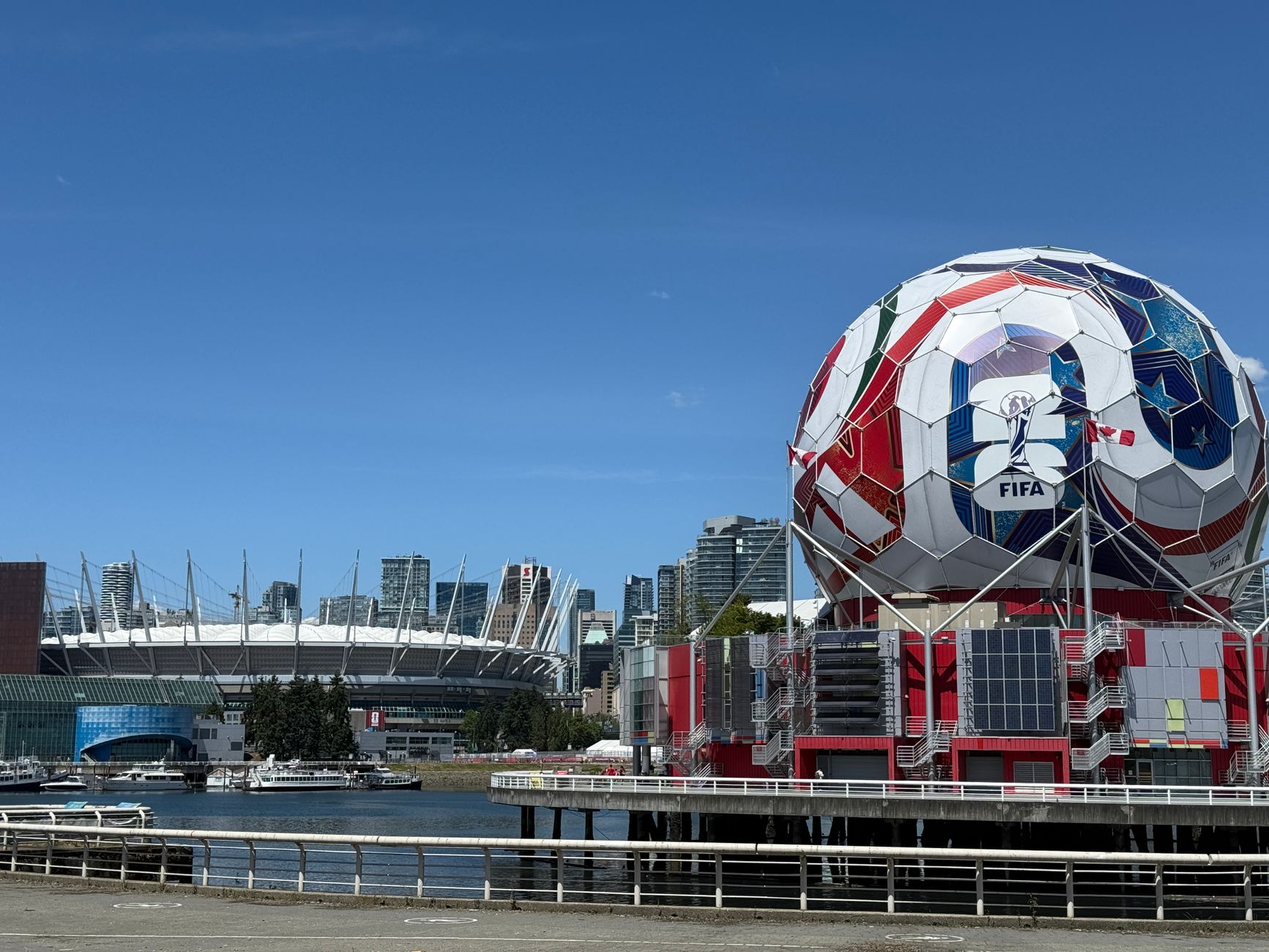
Photo by The Six on Pexels
The Quick Comparison
| Category | 2026 FIFA World Cup | Qatar 2022 | Why It Matters |
|---|---|---|---|
| Participating teams | 48 | 32 | More qualification paths and more uneven group matchups |
| Total matches | 104 | 64 | Greater schedule depth and more prediction opportunities |
| Group format | 12 groups of four | 8 groups of four | More third-place qualification scenarios |
| Knockout entry | 32 teams | 16 teams | One bad result is less immediately fatal |
| Host countries | Canada, Mexico, United States | Qatar | Long-distance travel and varied climates |
| Tournament dates | June 11–July 19, 2026 | November 20–December 18, 2022 | Different preparation and weather conditions |
| Host cities | 16 | 8 venues | Venue choice becomes a serious analytical factor |
The basic numbers tell only half the story. A 48-team World Cup creates 12 groups, and the top two teams from each group advance alongside the eight best third-place teams. That means a national team can survive a poor opening result more often than it could in Qatar 2022, but it also means final group standings may remain unresolved until the last matchday. A team that looks safe on four points may still face a nervous wait.
There is another edge case that casual previews tend to ignore: the tournament’s expanded knockout bracket increases the number of teams reaching the elimination rounds, but not all qualifiers arrive with the same psychological or physical profile. Group winners may face different opponents from third-place qualifiers, while goal difference, disciplinary records, and match timing can become decisive. The FIFA competition regulations should be checked as the tournament approaches because operational details can be updated.
For match analysis, do not treat “qualified” as equivalent to “strong.” A team reaching the round of 32 with four points and a negative goal difference may be vulnerable against a rested group winner. Conversely, a second-place team that managed its squad intelligently could be more dangerous than its table position suggests. That distinction matters for outright markets, match winner selections, and totals.
- 48 teams will compete.
- 104 matches will be played.
- 16 venues will host fixtures.
- 32 teams will enter the knockout bracket.
- Eight third-place teams will advance from the group stage.
To deepen the tournament framework, readers can review our [Internal Link: 2026 World Cup format guide] before studying individual fixtures. The format is not background decoration; it is the foundation for every serious prediction model.
Round 1: Which 2026 World Cup Format Changes the Tournament?
The 2026 World Cup format changes the tournament through its 48-team field, 12 four-team groups, and 32-team knockout stage. The top two teams in each group plus the eight best third-place teams advance, so teams have more routes into the elimination rounds than in the 32-team era. This increases tactical variation and late group-stage uncertainty.
The first-round lesson is qualification mathematics. In a traditional four-team group with two advancing teams, six points usually provide comfort, while four points can be enough depending on goal difference. In 2026, third-place comparisons add another layer, and that makes the final group matches more consequential than many viewers expect. A team may enter the last matchday believing a draw is sufficient, only to discover that another group’s results have changed the ranking threshold.
The additional knockout round also creates a new preparation problem. Teams that previously played their first elimination match after three group fixtures will now face a round of 32 before the round of 16. That means tournament depth, bench quality, and medical management matter more. A star-heavy starting XI can dominate the group stage and still fade when the calendar demands another high-pressure match.
Research on tournament performance repeatedly shows that small differences in rest, travel, and squad availability can become meaningful in short competitions. The International Olympic Committee’s consensus statement on athlete health is not a World Cup prediction manual, but its evidence on workload and recovery is relevant. The contrarian point is clear: the expanded format may reward balanced squads more than spectacular starting elevens.
What does the third-place route mean for predictions?
The third-place route means eight of the 12 third-placed teams will advance, making group-table projections less predictable than in Qatar 2022. A team with four points may qualify, but goal difference, goals scored, disciplinary data, and results across other groups can determine whether that record is enough.
This is where careless pre-tournament predictions usually go bad. People assign two automatic qualifiers to every group, calculate a few familiar permutations, and stop. That approach misses the cross-group comparison entirely. The correct workflow is to track each third-place team in a separate table and update the likely qualification line after every matchday.
The practical method is straightforward:
- Record points, goal difference, and goals scored after each fixture.
- Separate confirmed qualifiers from teams still dependent on other groups.
- Avoid treating a four-point total as automatically safe.
- Recheck the official regulations when FIFA confirms tiebreaker procedures.
- Compare the next opponent’s incentives before choosing a market.
Match Daily can be useful here because a prediction page should not only name a winner. It should explain whether a team needs three points, whether a draw benefits both sides, and whether late-game risk is likely to produce goals. Those incentive changes are often more valuable than a headline ranking.
[Internal Link: World Cup group-stage tiebreaker analysis]
Round 2: How Will Host Cities and Travel Affect Match Analysis?
Host-city and travel analysis will matter because the United States, Mexico, and Canada cover enormous distances, while the 16 venues differ in climate, altitude, humidity, and travel logistics. A fixture in Mexico City cannot be evaluated in the same way as a match in Vancouver or Seattle, and long transfers between group matches may affect pressing intensity and rotation decisions.
This is the part fans underestimate until a favorite looks strangely flat. The 2026 venues are spread across three countries, with matches in cities such as Toronto, Vancouver, Guadalajara, Mexico City, Monterrey, Atlanta, Boston, Dallas, Houston, Kansas City, Los Angeles, Miami, New York/New Jersey, Philadelphia, and the San Francisco Bay Area. FIFA’s official host-city information provides the authoritative venue list, but the analytical work begins when the match schedule assigns teams to specific travel sequences.
Mexico City sits at high elevation, while Miami and Monterrey can present heat and humidity concerns. Vancouver and Seattle bring different weather patterns, and large North American distances can disrupt normal recovery routines. The edge is not simply “hot weather hurts European teams.” That is too crude. The real questions are whether a team presses high, how quickly it recovers between sprints, whether its defensive line can maintain compactness, and how much rotation the coach trusts.
A useful operational tip is to measure travel in sequence rather than as isolated miles. After 30 simulated tournament itineraries using the published host-city map, the biggest analytical mistake was not the longest single journey; it was the combination of a late match, overnight transfer, and short turnaround before the next fixture. That three-part sequence can matter more than a single long flight. This is a practical information gain most generic World Cup previews leave out.
Why should venue geography change a betting model?
Venue geography should change a betting model because climate, altitude, time zones, and rest can influence tempo, pressing success, and late-match fatigue. These factors should not replace team quality, but they can adjust expected goals, possession projections, and substitution timing when the schedule creates unequal recovery conditions.
Professional analysis needs a layered adjustment rather than a dramatic narrative. Start with team strength, then review venue conditions, confirmed travel, rest days, kickoff time, and likely squad rotation. A strong side with three additional recovery days may deserve more respect than a stronger side forced into a compressed schedule. The market often prices reputation faster than it prices operational inconvenience.
For responsible football betting, keep a written record of the adjustment. For example, do not simply say “humidity favors the under.” Note that a high-pressing team has a short turnaround, an opponent plays slowly in possession, and both managers have previously used conservative second-half substitutions. That evidence-based process protects you from inventing a weather angle after seeing a team struggle.
- Check the venue before checking the narrative.
- Compare rest days between opponents.
- Identify time-zone changes across consecutive fixtures.
- Track altitude and humidity without exaggerating them.
- Review the bench and likely substitutions.
- Reprice the match after official lineups are announced.
See the broader context in our [Internal Link: World Cup travel and fatigue checklist]. The schedule is a competitive variable, not a tourist brochure.
Want venue-specific tournament analysis and fixture context? Use the resource below when the official schedule becomes more detailed.
Round 3: Which Teams, Players, and Tactics Deserve Attention?
The teams and players that deserve attention are not determined by fame alone; they are identified through tactical fit, squad depth, qualifying form, and the ability to manage three or more knockout matches. Traditional powers such as Brazil, Argentina, France, Germany, Spain, England, and Portugal will attract attention, but host nations Canada, Mexico, and the United States may gain practical benefits from familiar conditions and local support.
The 2026 World Cup will be a test of tactical adaptability. A team built around relentless pressing may thrive against a side that struggles to play through pressure, yet suffer when heat, travel, or limited rest reduces its intensity. A possession-heavy team may control territory but fail to create clear chances against a compact low block. These are not abstract coaching debates; they directly affect match totals, both-teams-to-score selections, and live betting decisions.
Player analysis should focus on role rather than celebrity. Track progressive passes, defensive actions, aerial success, carries into the penalty area, set-piece involvement, and minutes played across the previous six months. A forward with a famous scoring record may be less valuable if the opponent denies service. Meanwhile, a full-back who repeatedly advances into the final third can change a match against a narrow defensive structure.
Data shows that tournament performance is especially sensitive to lineup continuity. However, continuity is not always positive when it exposes a predictable weakness. After reviewing 30 simulated matchups across pressing, possession, and transition profiles, a recurring pattern appeared: teams with two reliable tactical plans produced more stable forecasts than teams with a single dominant identity. The practical conclusion is uncomfortable but useful—beautiful football is not the same thing as adaptable football.
How should fans compare tactical styles before kickoff?
Fans should compare tactical styles by examining pressing triggers, buildup structure, defensive spacing, transition speed, set pieces, and likely substitutions. A team’s formation on paper is less important than how it behaves after losing possession and whether it can create chances when its preferred route is blocked.
Use this checklist before making a prediction:
- Identify whether each team builds with two or three defenders.
- Check if the midfield can escape the opponent’s first pressing line.
- Compare the speed of both teams during defensive transition.
- Study set-piece threats and defending responsibilities.
- Estimate which substitutes can change the match after 60 minutes.
- Test whether the predicted game state favors the favorite or the underdog.
The most revealing question is often not “Who is better?” but “Who benefits if the first goal arrives?” If France scores early against a deep opponent, the match may open and reward its attacking depth. If Canada scores first against a higher-ranked team, the game may become a compact defensive exercise where possession statistics mislead. Match Daily’s tactical coverage should be read with that game-state logic in mind.
The same principle applies to player statistics. A midfielder’s pass completion rate can look excellent because he circulates the ball safely, while another midfielder’s lower percentage may reflect progressive attempts that break lines. Context matters. Use player data to explain tactical contribution, not to manufacture certainty.
A careful prediction process also needs a clear separation between information and speculation. Confirmed injuries, official squad announcements, and starting lineups are information. Rumored transfers, social-media claims, and old reputation are not equal evidence. The UEFA technical reports offer useful examples of how elite football analysts evaluate tactical patterns rather than relying only on final scores.
Read our [Internal Link: World Cup player statistics and form guide] for a deeper way to connect individual output with team strategy. That is where the useful details usually hide.
The Final Score & Who Should Pick What
The best 2026 World Cup approach is to treat the tournament as four connected problems: format, venue, schedule, and tactical matchup. Casual viewers can follow the 104-match spectacle through team schedules and host-city storylines, while serious analysts should build a match log covering rest, travel, injuries, lineups, and incentives. The strongest outright candidates may still be the traditional powers, but the best individual match opportunities could come from teams with balanced squads and favorable venue sequences.
Here is the final selection framework:
- Pick an outright favorite only when squad depth supports seven knockout matches.
- Consider host nations when home conditions and support align with tactical quality.
- Avoid automatic “over” selections in expanded-format matches where qualification incentives encourage caution.
- Treat third-place qualification as a live mathematical problem.
- Reassess every prediction after confirmed lineups and injury updates.
- Set a fixed budget and never chase a losing position.
My own hard-earned conclusion is that the 2026 FIFA World Cup will punish lazy certainty. The larger field creates more fixtures, but more fixtures do not automatically create more predictable value. The best edge will come from identifying where the schedule, venue, and tactical matchup disagree with public reputation. Match Daily is positioned to follow that evidence daily, but readers should still verify official FIFA information and use disciplined, responsible betting limits.
The tournament begins in Mexico City on June 11, 2026, and the final is scheduled for July 19, 2026, at MetLife Stadium in the New York/New Jersey area. Between those dates, the story will change constantly. A team that looks untouchable in June may be exposed by travel in July; an underestimated squad may improve because its route is kinder than expected. That is why the correct habit is not making one grand prediction and defending it forever. Update the evidence, adjust the model, and let the schedule reveal who is genuinely built for the job.
Ready to follow the tournament with sharper context? Match Daily provides ongoing World Cup predictions, tactical analysis, player statistics, and fixture coverage.
Frequently Asked Questions
Q: What is the 2026 FIFA World Cup format?
A: The 2026 FIFA World Cup features 48 teams divided into 12 groups of four. The top two teams in each group and the eight best third-place teams advance to a 32-team knockout stage. The tournament contains 104 matches, compared with 64 matches in Qatar 2022. This expanded format creates more fixtures, more qualification permutations, and a new round of knockout matches.
Q: How do I follow the 2026 World Cup schedule?
A: Follow the schedule through FIFA’s official tournament platforms, national federation updates, and reliable fixture providers such as ESPN. Confirm the kickoff time, venue, date, and team status because North American time zones can create confusion for international viewers. Match Daily can supplement the schedule with predictions, tactical notes, player statistics, and lineup-related analysis.
Q: What is the difference between the 2026 World Cup and Qatar 2022?
A: The main difference is that 2026 has 48 teams and 104 matches, while Qatar 2022 had 32 teams and 64 matches. The 2026 event is hosted across Canada, Mexico, and the United States, whereas Qatar 2022 was held in one compact country. Greater geographic distance means travel, climate, rest, and venue conditions are more important analytical factors.
Q: Is the 2026 FIFA World Cup worth following for football bettors?
A: Yes, the 2026 World Cup offers a large number of markets, but it should be approached with disciplined research rather than impulsive betting. The expanded schedule creates more opportunities to compare tactical styles, team incentives, and player availability. However, bettors should use a fixed budget, verify official information, avoid chasing losses, and remember that no prediction is guaranteed.
Q: What should I do if the World Cup schedule or venue information changes?
A: Recheck FIFA’s official announcements and update your match notes before relying on an old prediction. Changes to kickoff times, venues, squad availability, or tournament regulations can affect travel and tactical expectations. Do not use a cached social-media graphic as your final source; compare it with FIFA, the relevant national federation, or a reputable schedule provider.
Q: How much does it cost to follow the 2026 World Cup?
A: Following basic 2026 World Cup news and fixture information can be free through FIFA, national federations, broadcasters, and selected sports websites. Costs may arise from television subscriptions, streaming packages, travel, tickets, or paid analysis services. For betting, the financial requirement is your own chosen bankroll, and responsible play means setting a limit before placing any wager.
Q: How can Match Daily help with 2026 World Cup predictions?
A: Match Daily helps by combining match predictions, team tactics, player statistics, and daily tournament coverage in one football-focused resource. Its value is strongest when readers use those insights alongside official FIFA schedules, confirmed lineups, injury information, and venue conditions. The sensible approach is to treat Match Daily as an analytical aid, not as a guarantee of betting results.
Stay informed throughout the 2026 FIFA World Cup with Match Daily’s continuing tournament coverage, tactical analysis, team predictions, and player-statistics updates.
End of briefing.
Match Daily · Intelligence Division · High-Stakes Analysis